
Sydney Business: Startup Funding Year-End
Sydney's startup funding is wrapping up a strong year with record investment levels. The city's innovation ecosystem has attracted significant venture
6 min read

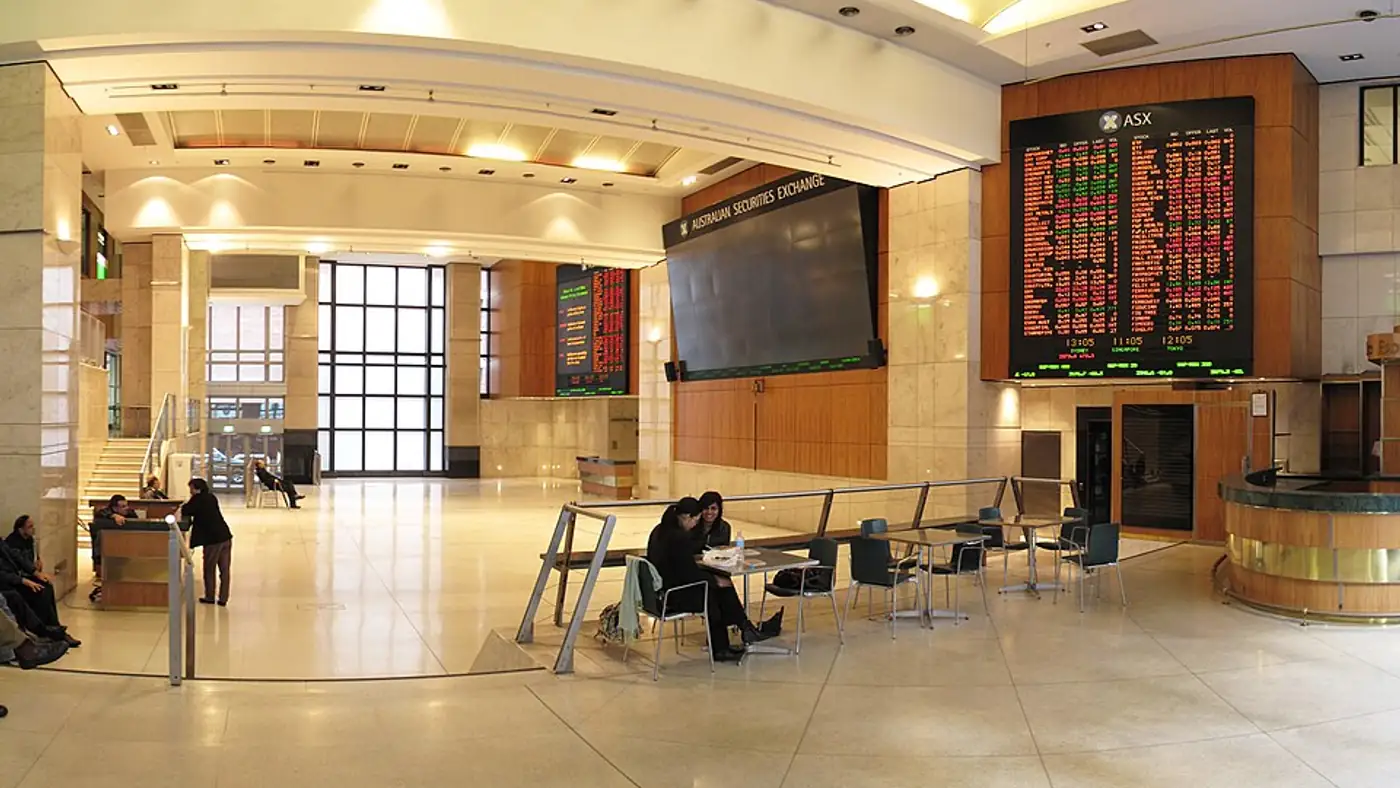
The S&P/ASX 200 finished September at a record close of 9,341 points, up 4.8 per cent, with the big four banks driving the index through its prior high
Business & Markets Desk is a contributing writer covering business and public affairs for The Sydney Times.
Australia's benchmark share index finished the first month of the southern spring at its highest close on record, with the S&P/ASX 200 up 4.8 per cent across September on a broad rally led by the major banks. The index closed at 9,341 points on the last session of the month, up 428 points, clearing the previous high of 9,267 points set in mid-August during the heavy August reporting season.
The ASX 200 record close came despite a resources complex that spent most of the month in the red, and a technology sector that gave back early gains after a volatile September. Breadth, rather than leadership, defined the month: 178 constituents rose over the final session, with all 11 sectors finishing higher for the quarter.
Financials contributed roughly 38 per cent of the index's September gain, according to sector weightings published by market data providers. Commonwealth Bank rose 7.2 per cent across the month, Westpac gained 6.8 per cent, National Australia Bank added 6.1 per cent and ANZ improved by 5.4 per cent. Macquarie Group, the largest non-bank heavyweight by index weight, rose 4.9 per cent.
The bank rally was driven by a combination of capital management signals and a market expectation that the Reserve Bank of Australia is approaching the end of its tightening cycle. The bank's second-quarter update in August pointed to a capital return of roughly $4.1 billion, and the September trading update reported a 12 per cent increase in quarterly earnings.
"There's a real change in how the market is pricing the majors," said one Sydney-based strategist at a domestic brokerage, describing the shift from the yield-driven rotation of August. "The first half of the month was about funding costs, and the back half was about how much of those costs get passed through to borrowers."
The rally also helped lift the Australian dollar, which traded around 68.4 US cents late in the month, having spent August below 66 cents.
The materials sector was the drag on the month, finishing September 0.4 per cent lower. Iron ore held up well, with the 62 per cent benchmark averaging US$104 a tonne through the quarter, but coal and base metals gave back ground as Chinese steel demand data disappointed.
BHP Group finished the month 0.8 per cent lower, Rio Tinto fell 1.6 per cent, and Northern Star Resources declined 3.2 per cent. Fortescue edged up 0.4 per cent. Energy was volatile, with the Woodside and Santos names tracking a Brent crude price that spiked above US$107 a barrel in mid-month before easing.
The divergence is the mirror image of August, when rising bond yields punished long-duration resource valuations. September rewarded balance sheets with stable cash flows and predictable capital returns.
The RBA's next scheduled decision is on 29 September 2026, and market pricing has shifted considerably since the August meeting. Futures now imply roughly a 70 per cent chance of a hold, against a strong expectation of an increase a month earlier. Australian 3-year government bond yields eased from the 15-year highs reached during the August sell-off.
Domestic data due in October is now the main focus: monthly employment figures, the quarterly Consumer Price Index, and the Reserve Bank's Statement on Monetary Policy. The RBA has repeatedly indicated that it will hold until it is confident inflation is converging, and the September hold case rests on the argument that the August tightening has already done the work.
A record close is a level, not a signal. Index-level valuations now sit above the five-year average on forward price-to-earnings multiples, and the market's advance has been led by a single sector. Investors who bought into the August drawdown have recovered; investors who chased the August rally into the September record have not.
For more on Australian market wrap and the RBA, see the Business & Markets and Markets hubs. Exchange data and index composition are published by ASX.
Direct inquiries, corrections, or documentation concerning this dispatch to our editorial newsroom desk.
Sydney's startup funding is wrapping up a strong year with record investment levels. The city's innovation ecosystem has attracted significant venture

The ASX year-end review shows mixed results as global economic conditions shift. Australian equities have navigated a complex landscape of interest rate

Sydney's export trade is showing resilience as global demand shifts. The city's diverse export base is helping it weather international economic

The ASX is showing mixed signals as global economic conditions shift. Investors are navigating uncertainty as international markets react to changing