
Sydney Opinion: Future of Sydney: An independent column on the
The column provides critical perspectives on Greater Sydney and Australian life, examining the forces that will shape the city in the decades to come.
5 min read

The timing is not coincidental, and it exposes the gap between the political rhetoric of housing supply and the structural reality of delivering it.
The Property Desk is a contributing writer covering opinion and public affairs for The Sydney Times.
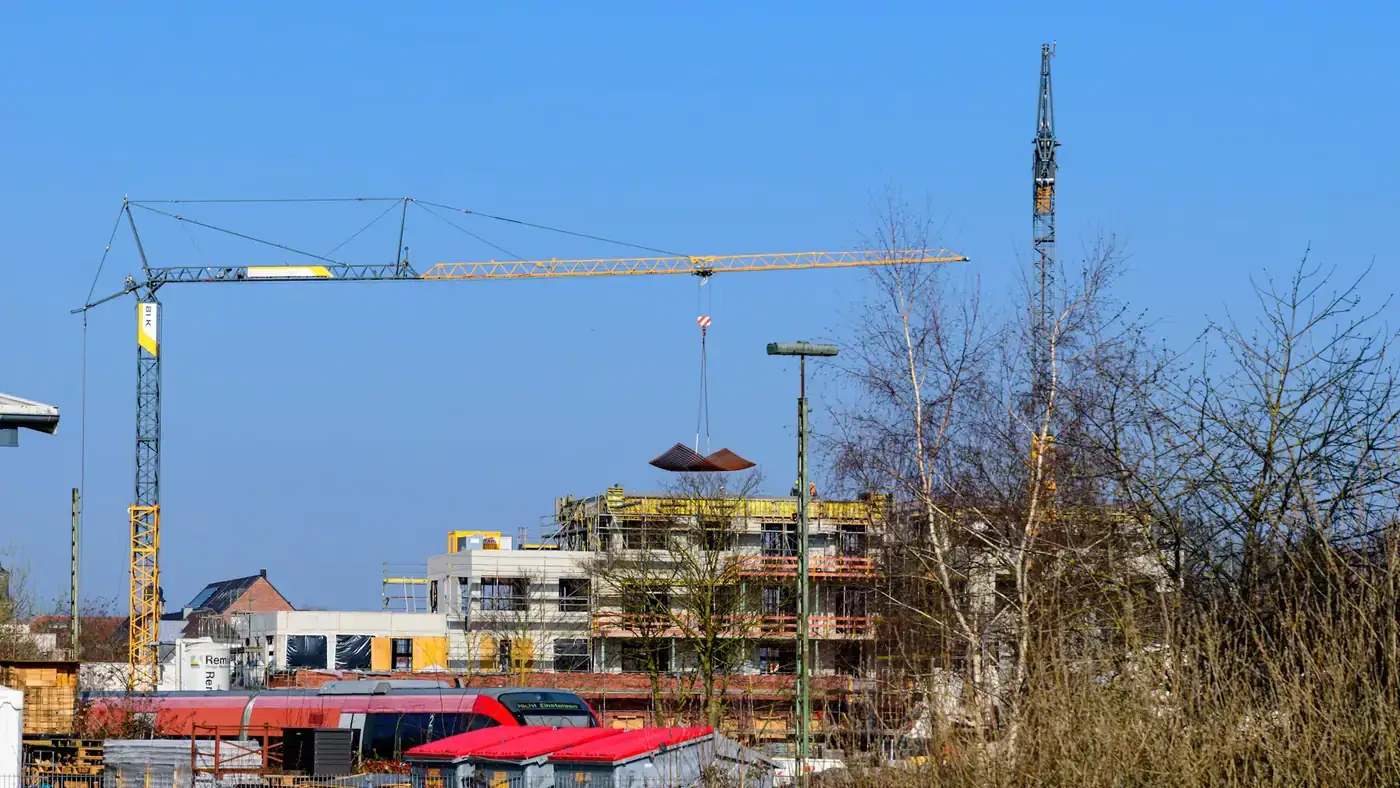
When the Bathla Group entered voluntary administration in August 2026, owing about $3.4 billion to private lenders, it took with it more than 2,000 apartments under construction and a further pipeline of 14,000 homes. The developer had been one of Australia's largest providers of affordable housing, and its collapse came just 11 days after NSW introduced mandatory 10-year Liability Insurance for new residential developments. The timing is not coincidental, and it exposes the gap between the political rhetoric of housing supply and the structural reality of delivering it.
The NSW Government's response to the housing crisis has been to focus almost exclusively on planning reform. The Transport Oriented Development Program, the Housing Delivery Authority, and the Low and Mid-Rise Housing Policy have rezoned land, streamlined approvals, and set binding housing targets. The National Housing Accord commits NSW to 377,000 new homes by mid-2029. But the Bathla collapse shows that supply is not just a planning problem. It is a construction finance problem, a quality regulation problem, and an economics problem.
Bathla was not a typical developer in one crucial respect. None of its 43 lenders were major banks. The company was funded almost entirely by private credit firms, which raise money from investors at interest rates of 7 percent or more and lend it to businesses that cannot get loans from banks. The reason banks have withdrawn from residential construction finance dates back to the global financial crisis, when the banking regulator APRA changed capital rules to favour real estate security over the future cash flows of property developers.
The result is that residential construction in Australia has been handed over to a shadow banking system that charges higher rates, demands shorter terms, and has less capacity to ride out downturns. Bathla operated through hundreds of special purpose vehicles, each project financed separately, each lender exposed to a single development rather than the diversified balance sheet of a major bank. When the NSW Building Commission conducted more than 40 inspections of Bathla sites and ordered serious defects to be fixed, lenders could see that final completion approvals might be refused. Without access to the new 10-year Liability Insurance, which requires rigorous risk assessments and independent construction audits, Bathla could not sell its apartments. The lenders refused to roll over debt, and administration followed.
The Productivity Commission draft report released in July 2026 identified the problem without naming Bathla. It noted that restrictive land-use regulation, slow approvals, poor infrastructure coordination, and complex regulation all increase costs and delays. But it also observed that construction insolvencies have risen back to pre-COVID levels, with 3,472 Australian construction companies collapsing in the financial year to June 2026. One in four company insolvencies nationally was in construction. Small builders, who make up almost two-thirds of building company collapses, are particularly exposed to overlapping national, state, and local requirements.
The Bathla collapse also exposed the gap between the National Construction Code and the quality outcomes that buyers expect. The NCC is a 2,000-page document that sets minimum standards for safety, health, and amenity. But it does not cover missing doors, poor finishes, or the kind of defects that Bathla buyers complained about. The answer most likely lies in the system of private inspections and approvals that allows developers to shop around for lenient certifiers. The Environmental Protection Authority alleged that a private certifier falsified approval documents on four Bathla development sites.
NSW has responded with a hybrid system. Day-to-day construction checks are still done by private building certifiers, but the Building Commission NSW acts as auditor, investigator, and disciplinary force. The Building (Approvals and Practitioners) Act 2026 introduced mandatory 10-year Liability Insurance, which requires developers to undergo rigorous risk assessments tied to independent ratings such as the iCIRT tool. Only 219 companies are on the iCIRT registry. Bathla is not one of them.
The tension is that quality regulation costs money, and affordable housing is by definition built on thin margins. The NSW Government's own data shows that house construction costs are 51 percent higher than before COVID. Builders locked into fixed-price contracts are absorbing losses they cannot sustain. Falling house prices and poor market sentiment mean some projects no longer stack up financially. The federal budget changes to negative gearing and capital gains tax in May 2026 added another layer of uncertainty, reducing demand from investors who had traditionally funded off-the-plan apartment purchases.
The National Housing Accord target of 1.2 million new homes by 2029 was always ambitious. Official forecasts released in August 2026 indicate the target will not be met until December 2030. NSW may not meet its 377,000-home target until March 2032, three years late. As of mid-2026, only 67,502 homes had been completed in NSW since the accord began, about 46,000 short of the 113,000 required.
Planning reform is necessary but not sufficient. Delivering 377,000 homes in five years requires three things moving in sync: planning approvals accelerating, developer capacity expanding, and infrastructure funding flowing to support new density. NSW has made progress on the first, though the Housing Delivery Authority approved only two projects in its first year. It has done less on the second, because construction finance remains constrained and small builders are exiting the market. It has done almost nothing on the third, because the Sydney Plan does not commit state or federal capital to the trunk infrastructure required to support new housing.
The Bathla collapse should be a turning point. It demonstrates that the construction system is not capable of delivering the volume of affordable housing that the political targets demand, unless the underlying economics are fixed. That means addressing construction cost inflation, reforming the finance model so that banks return to residential development, and ensuring that quality regulation does not inadvertently restrict supply by making insurance unaffordable for the developers who need it most. Planning reform is part of the solution, but it is not the whole solution, and treating it as such will only prolong the crisis.
The Productivity Commission draft report on housing supply is available at Productivity Commission. Details of the National Housing Accord and NSW targets are published at National Housing Accord. The NSW Building Commission provides updates on construction regulation at NSW Building Commission.
Explore more Opinion & Ideas at the Opinion & Ideas hub
Read about Sydney housing and property analysis at the Property & Suburbs hub
Direct inquiries, corrections, or documentation concerning this dispatch to our editorial newsroom desk.
The column provides critical perspectives on Greater Sydney and Australian life, examining the forces that will shape the city in the decades to come.

An independent column on the impact of technology on Sydney society. The column provides critical perspectives on how digital transformation.

An independent column on Sydney's housing affordability crisis and what can be done. The column provides critical perspectives on the challenges facing.
An independent column on the future of Sydney, covering urban planning, infrastructure, and city living. The column provides critical perspectives.