
Sydney City: Western Sydney Airport
Western Sydney Airport is preparing for its first full year of operations.
6 min read

The NSW Government has committed $2.1 billion to extend light rail from Parramatta to the Aerotropolis, moving the project into formal planning next year
The City Desk is a contributing writer covering city and public affairs for The Sydney Times.
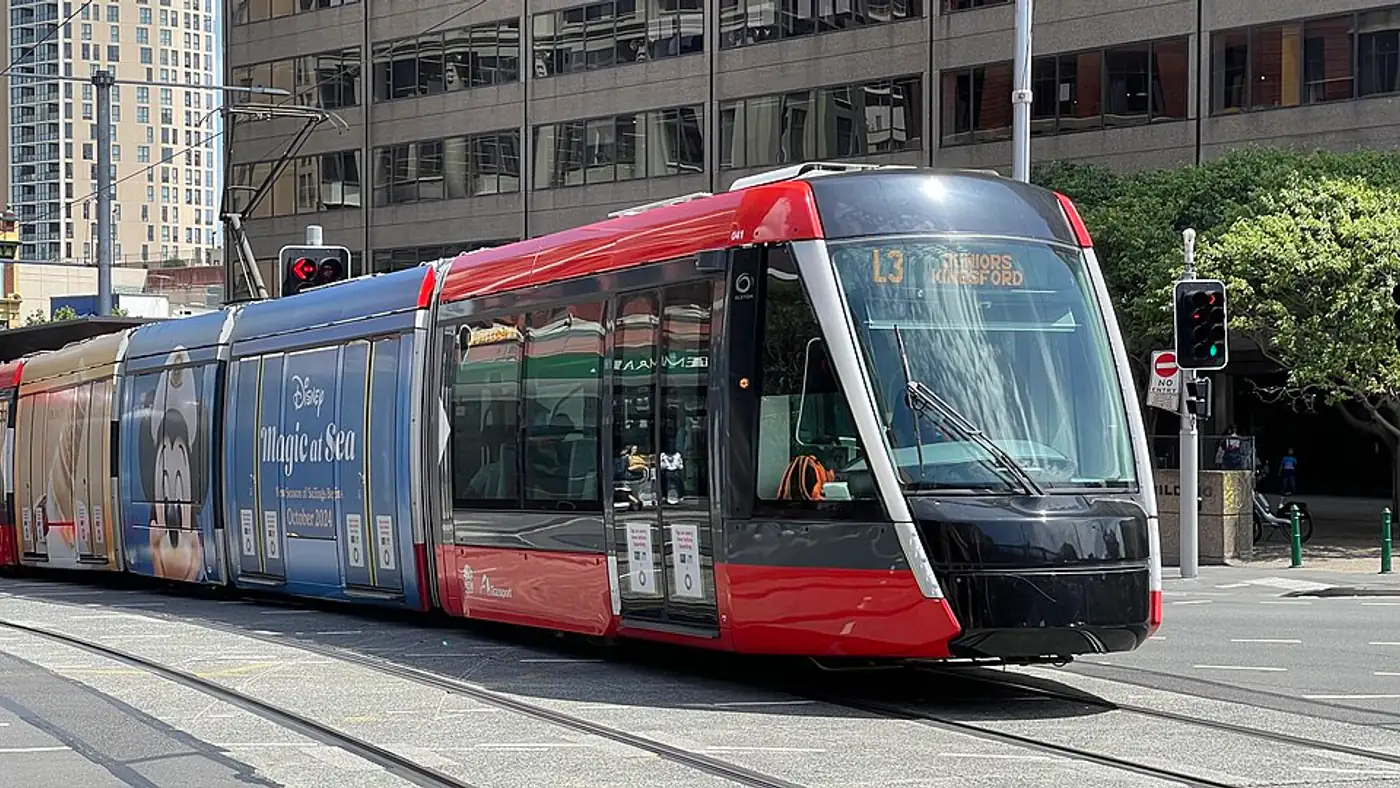
The NSW Government has confirmed a $2.1 billion funding commitment for a Parramatta light rail extension, taking the project into formal planning ahead of a procurement decision expected in the second half of next year.
The extension would run about 11 kilometres from the existing Parramatta terminus at Church Street to Western Sydney International Airport and the Aerotropolis centre at Bradfield, following much of the corridor already reserved for the Sydney Metro Western Sydney Airport line. The first stage, from Parramatta to a new interchange at Oran Park, is expected to be delivered by 2032.
Transport for NSW has released two service options for consultation. The first extends the existing line in Parramatta through the new Bradfield interchange, requiring passengers to change services at Oran Park. The second runs through services to the airport, which adds roughly seven minutes to the Parramatta to Central journey.
The through-running option is cheaper to build but operationally harder, because it depends on the fleet and signalling specification of the second stage of the Parramatta line, now under construction, and on the completion of a combined stabling and maintenance facility at Merrylands.
A third possibility, raised in earlier planning, would take the extension along a separate alignment to the north of Parramatta Road, serving Granville and Mays Hill. That option was not carried into the current consultation because of its cost and its poor fit with the Metro alignment.
The commitment covers design, the stabling facility, vehicle procurement and the first stage of construction, but not the full length of the line to the airport. Transport for NSW has not published an estimate for the Oran Park to Bradfield section, which planning documents previously put in the range of $2.6 billion to $3.2 billion.
The funding is drawn from the state capital works program rather than a dedicated transport levy, and the government has said the project is not contingent on a further federal contribution. It does, however, require a business case to be finalised, and the department has signalled that the case must demonstrate a benefit-cost ratio above 1.2 to proceed to tender.
Critically, the commitment does not cover service frequency or station upgrades on the existing Stage 2 alignment, which the Parramatta light rail business case identified as the single largest driver of patronage uncertainty.
Modelling prepared for the extension, published in August, projects around 41,000 daily boardings by 2035, but the figure is highly sensitive to one unresolved question: whether the Oran Park interchange is a simple station change or a through-running junction. A transfer penalty of four minutes, a common assumption, removes roughly 6,000 daily trips from the estimate.
Transport staff have also flagged that the extension's business case is being prepared on a basis of a 30-minute service frequency in the peaks, with no additional vehicles identified in the commitment. Stage 2 fleet numbers are fixed, which means an extension above 30-minute frequency depends on operating through a different stabling arrangement than the one currently contracted.
Parramatta Road is the main argument. The road carried 78,000 vehicles a day at the Elizabeth Street count in 2024, and the consultation documents acknowledge that light rail will require a permanent reallocation of lanes through the Granville and Guildford sections.
Businesses in the Guildford and Auburn corridor have organised against further narrowing, and a business chamber paper released in July estimated that up to 4,400 car parks would be lost across the corridor. The government's response has been a promise of replacement parking at key stations, funded from the same envelope.
Community advocacy groups opposed to the corridor's construction history have asked for an independent safety audit, following similar campaigns on the Stage 2 project. Transport for NSW has agreed to a review of signal priority at the Guildford Road intersection, the site of three recorded incidents during Stage 2 testing.
The planning submission period runs to 27 November, with a preferred corridor option expected to be announced in the first half of next year. Thirty-one elected members of the state upper house have already asked for the business case to be published in full before that decision.
Consultation material and the Stage 2 delivery program are published by Transport for NSW. For related coverage, see the City hub.
Direct inquiries, corrections, or documentation concerning this dispatch to our editorial newsroom desk.
Western Sydney Airport is preparing for its first full year of operations.

Sydney Metro City Southwest extension is preparing for trial runs in 2026. The extension will add 12 stations and 26 kilometres of track to the Sydney

Western Sydney hospitals receive a $38 million health package boost. The funding will support critical infrastructure upgrades and expanded services

The Western Sydney Airport aerotropolis is attracting unprecedented investment ahead of the October 25 opening. The airport is the centrepiece of the