
Sydney Tech: 5G Network Expansion
Sydney's 5G network expansion is accelerating as coverage improves. The major telecommunications providers are expanding their 5G networks across the
5 min read

Atlassian grew revenue 26 per cent while cutting about 1,600 jobs in March to self-fund AI investment, then bought back $348 million of stock.
The Tech & Ideas Desk is a contributing writer covering tech and public affairs for The Sydney Times.
Atlassian grew revenue 26 per cent to US$6.57 billion in the year to June 2026, reported a US$54 million net loss, cut about 1,600 jobs in March "to self-fund further investment in AI," and repurchased US$348 million of its own stock in the June quarter alone. Those four facts sit in the same set of accounts, and together they describe the most consequential decision the Sydney-founded software company has made.
Atlassian is Nasdaq-listed, not ASX-listed, and reports to the US Securities and Exchange Commission. The results were announced on 6 August 2026. The first quarter of FY2027, covering July to September, had not been reported as of 5 October.
Full-year revenue of US$6,572.3 million was up 26 per cent on US$5,215.3 million, with the June quarter at US$1,766.5 million, up 28 per cent. Cloud revenue reached US$4,410.6 million, up 28 per cent. Subscription annual recurring revenue stood at US$6,606 million as at 30 June, up 23 per cent. Remaining performance obligations, the contractual backlog, hit US$4,817 million, up 44 per cent.
The GAAP picture is weaker than the ARR headline. Full-year GAAP operating income was US$10.4 million, a 0.2 per cent margin, against a US$130 million operating loss the previous year. The net loss narrowed to US$53.8 million from US$257 million. Diluted loss per share was US$0.21, improved from US$0.98.
Chief executive Mike Cannon-Brookes framed the year as vindication: "Q4 closes out a year that proves our long-term strategy is paying off." Chief financial officer James Chuong pointed to "GAAP profitability, with an operating margin of 12% in Q4."
Both statements are true and describe different things. A 12 per cent quarterly operating margin is a genuine milestone. It sits on a full-year GAAP operating margin of 0.2 per cent.
On 11 March 2026 Mr Cannon-Brookes told staff the company was reducing its workforce by roughly 10 per cent, about 1,600 employees. The rationale was explicit: "We are doing this to self-fund further investment in AI and enterprise sales, while strengthening our financial profile."
Separately, chief technology officer Rajeev Rajan, formerly of Meta, stepped down on 31 March after nearly four years. He was replaced by two internal promotions, Taroon Mandhana as chief technology officer of Teamwork and Vikram Rao as chief technology officer of Enterprise and chief trust officer.
Atlassian employed 13,301 full-time staff as at 30 June 2026. The company does not publish an Australian headcount in its annual filing, which gives only total full-time equivalents and notes staff are spread across 15 countries. Roughly 480 of the March cuts were reported as Australian-based, attributed to a company spokesperson rather than to a filing.
Atlassian discloses no revenue, pricing or attach rate for Rovo, for Rovo credits, or for the Teamwork Graph. What it publishes are engagement measures, and they are company-selected cohort comparisons with no methodology stated.
Those figures are nonetheless striking. More than 80 per cent of Fortune 500 companies now use Rovo. Rovo-assisted actions rose more than 50 per cent quarter on quarter. Adopters complete 20 per cent more Jira work items and create or edit 25 per cent more Confluence pages than non-adopters, and grow ARR more than twice as fast. Agentic automations in Jira Service Management more than tripled in six months. The MCP server and Teamwork Graph CLI passed one million monthly active users, more than doubling in a single quarter.
Mr Cannon-Brookes put the strategic bet plainly: "In the AI era, context is the edge but it's hard to build and can't be hired." That is the answer to the risk that foundation models commoditise the Jira and Confluence layer, and it is an assertion rather than a measured moat.
Data Center, Atlassian's on-premises product, generated US$1,830.9 million in FY2026, up 25 per cent. It is also scheduled for end of life in March 2029, announced in September 2025. FY2027 guidance has Data Center revenue declining about 17 per cent.
Two things compound here. The FY2026 growth was flattered by the recognition of more upfront term licence revenue, which flatters growth rates that then reverse. And the line is simultaneously a third of total revenue and a business in run-off.
Guidance for FY2027 calls for total revenue growth of about 13 per cent, the slowest in years, with Subscription ARR growth of 18 per cent and cloud growth of about 25.5 per cent. First-quarter guidance was revenue of US$1,705 million to US$1,715 million.
Atlassian repurchased 19.1 million shares for US$1.8 billion across FY2026, reducing net share count by 4 per cent, with roughly US$1.9 billion of authorisation remaining. In the June quarter it bought 4.6 million shares for US$348 million while quarterly free cash flow was US$475 million.
This is where the AI-cuts logic is hardest to defend on its own terms. Cutting 1,600 roles to self-fund AI investment while spending US$1.8 billion buying back stock means the company had capital available and chose where to put it. The FY2026 severance cash cost was approximately US$70 million. The total programme cost is not disclosed in the results.
On acquisitions, Atlassian completed the purchase of The Browser Company of New York for approximately US$610 million in cash in October 2025, and stated at announcement that it was "not expected to have a material impact on the company's financials in fiscal years 2026 and 2027." No standalone revenue is attributed to Dia or Arc anywhere in the FY2026 numbers.
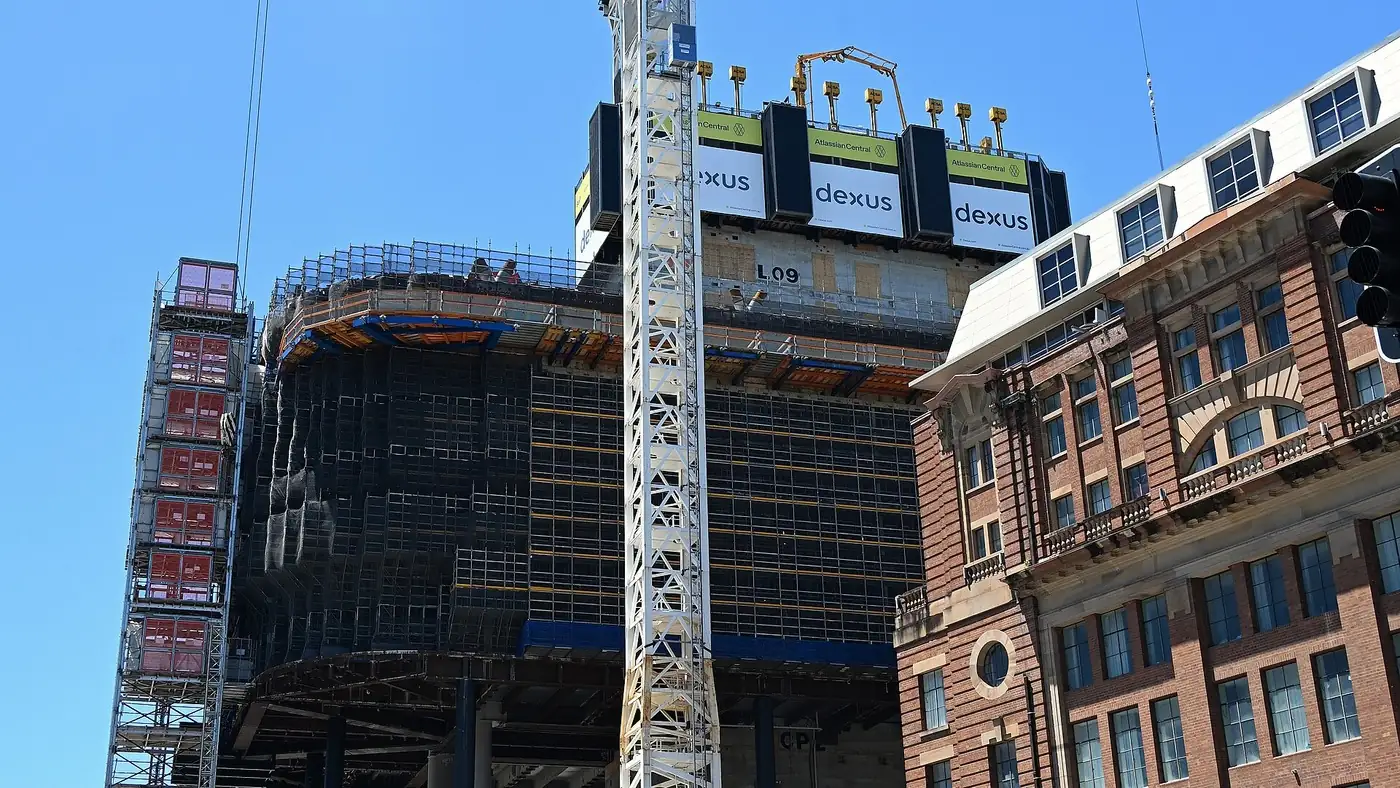
Australian commercial operations sit at 341 George Street, with Atlassian Central beside Central Station a 59,100 square metre hybrid timber tower. Primary filings are on Atlassian's SEC EDGAR record and our Tech and Ideas desk covers the sector.
Direct inquiries, corrections, or documentation concerning this dispatch to our editorial newsroom desk.
Sydney's 5G network expansion is accelerating as coverage improves. The major telecommunications providers are expanding their 5G networks across the

Sydney's quantum computing sector is attracting significant investment and talent.

Sydney businesses are accelerating their cloud computing adoption as migration costs fall. The trend is reshaping how organisations across the

Sydney businesses face increasing cybersecurity threats as attack volumes rise. The surge in cyberattacks is prompting organisations across the