
Sydney Business: Startup Funding Year-End
Sydney's startup funding is wrapping up a strong year with record investment levels. The city's innovation ecosystem has attracted significant venture.
6 min read

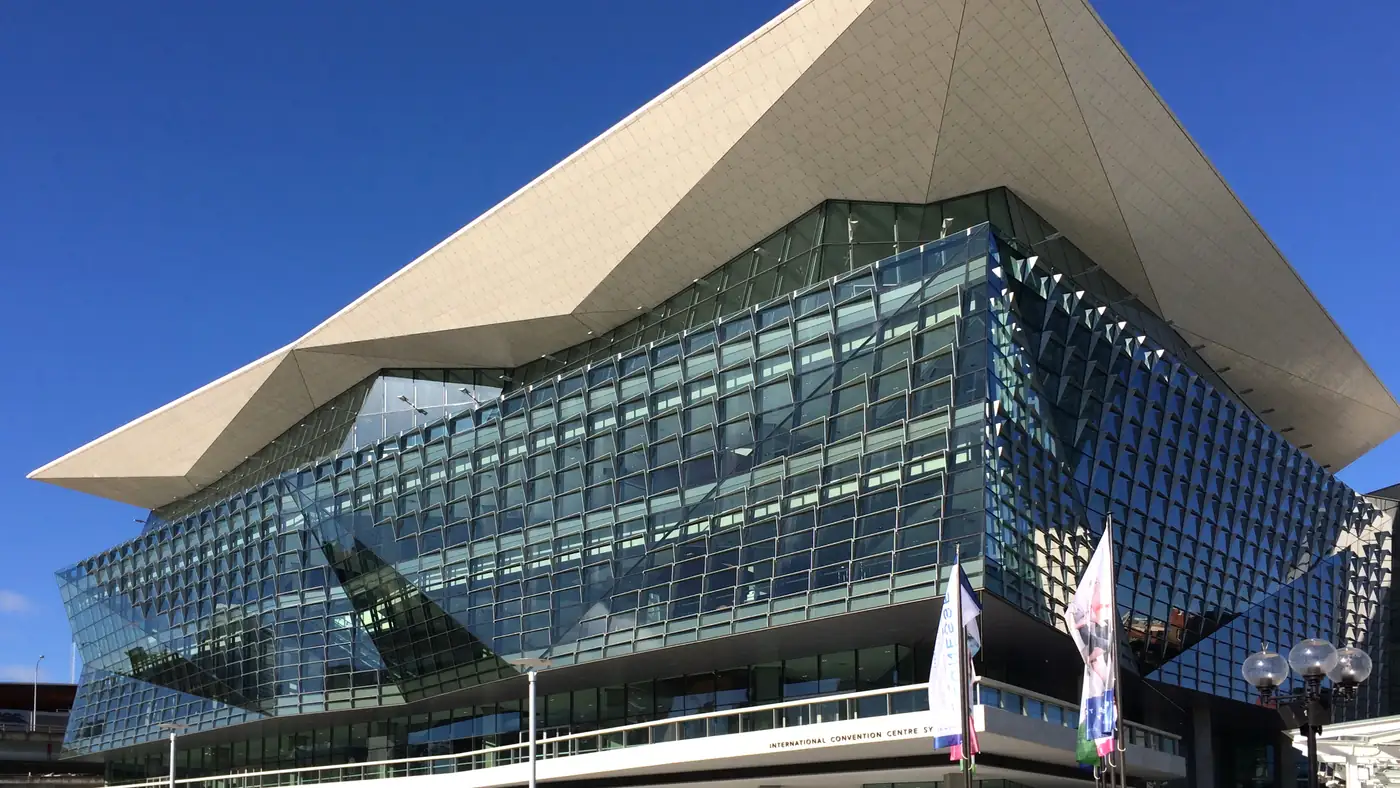
The International Convention Centre Sydney will install 4,500 photovoltaic panels across its Darling Harbour rooftops, creating what the NSW government.
The City Desk is a contributing writer covering business and public affairs for The Sydney Times.
The International Convention Centre Sydney will install 4,500 photovoltaic panels across its Darling Harbour rooftops, creating what the NSW government describes as the largest solar farm in any Southern Hemisphere central business district. The 2.6 gigawatt-hour annual array will enable the government-owned venue to run entirely on renewable electricity when combined with renewable energy procurement, cutting emissions by up to 2,000 tonnes a year and offsetting power bills that have reached $1.8 million annually.
The project replaces an existing 550 kilowatt system installed when the centre opened in 2016. Older panels were too heavy for certain rooftop sections, limiting the original footprint. Lighter panel technology now available allows the centre to expand across the Convention Centre, Exhibition Centre and Entertainment Centre rooftops, covering more than 18,400 square metres in total. The expanded array will generate roughly 300% more energy than the original installation.
Adam Mather-Brown, chief executive officer of ICC Sydney, said the venue had already completed a full re-bulbing exercise across thousands of lights to reduce consumption before the solar expansion was planned. The older panels removed during the upgrade are being dismantled and donated to Kindly Animal Sanctuary near Armidale for reuse, with an estimated remaining lifespan of 10 to 15 years.
The 2.6 GWh annual generation is enough to power approximately 400 average Australian homes for a full year. The solar array will cover the Convention Centre, Exhibition Centre and Entertainment Centre rooftops, making ICC Sydney the fourth-largest solar-powered convention centre in the world by annual generation and the largest outside the United States, according to the NSW government's calculations.
Minister for Planning and Public Spaces Paul Scully said the project demonstrated how urban renewable energy generation could be unlocked using existing building rooftops, and that it would strengthen Sydney's competitiveness in attracting major international conventions and events. Scully declined to commit to establishing a Renewable Energy Zone in Sydney, but indicated that the Illawarra urban REZ, currently being set up as Australia's first, would serve as a test bed for what could be scaled to other urban communities.
The ICC Sydney investment follows the completion of the Carawatha Solar Farm, which has enabled neighbouring Barangaroo to operate at net zero for decades. Barangaroo's transition to net zero was achieved through a combination of rooftop solar, tri-generation energy, and pumped hydro, providing a precedent for large-scale urban renewable energy integration in the Sydney CBD.
The solar farm will supply electricity directly to ICC Sydney's operations, including cooling, lighting, and event infrastructure across the three centre buildings. Surplus generation not consumed on-site will be exported to the grid under a renewable energy procurement arrangement. The combined on-site solar and procured renewable energy means the venue will no longer rely on fossil-fuel generation for its baseload power needs.
Event organisers increasingly weight sustainability credentials when selecting venues. ICC Sydney said the expanded solar network would allow clients to reduce the carbon footprint of events hosted at the centre, supporting corporate and government sustainability targets. The centre already holds various sustainability certifications and has incorporated recycled water and energy-efficient building management systems in its operations.
The NSW government's renewable energy ambitions centre on the Illawarra Renewable Energy Zone, which is being established as Australia's first urban REZ. The zone will draw from solar generated on residential and commercial rooftops, combined with community and home batteries, to provide firming capacity for the grid. The High Speed Rail Authority has also flagged the need for renewable energy supply to support electrified rail operations, though specific generation procurement for the Newcastle to Sydney line has not yet been announced.
Scully was asked whether the government was looking at an REZ in Sydney. He did not confirm or deny, instead pointing to the Illawarra as a test case. That position leaves open the possibility that CBD rooftop solar at sites like ICC Sydney could eventually feed into a formal urban REZ structure, but no timeline or regulatory pathway has been proposed.
The project requires no major planning approval beyond standard development consent, as it involves rooftop replacement on an existing building. Construction of the new array is expected to commence within months, with installation and commissioning completed before the centre's next major convention season. The old panels are already being removed and transferred to the animal sanctuary near Armidale, with transport arranged by the project team.
The NSW EPA monitors all large energy and infrastructure projects for compliance with environmental protection licences where relevant, but rooftop solar replacement on an existing commercial building does not trigger state significant infrastructure assessment under current planning rules.
Direct inquiries, corrections, or documentation concerning this dispatch to our editorial newsroom desk.
Sydney's startup funding is wrapping up a strong year with record investment levels. The city's innovation ecosystem has attracted significant venture.

The ASX year-end review shows mixed results as global economic conditions shift. Australian equities have navigated a complex landscape of interest rate.

Sydney's export trade is showing resilience as global demand shifts. The city's diverse export base is helping it weather international economic headwinds.

The Reserve Bank of Australia held the cash rate at 4.35% in September 2026, citing easing inflation while warning of persistent services price pressures.