
Sydney City: Western Sydney Airport
Western Sydney Airport is preparing for its first full year of operations.
6 min read

A four year program will fit 22 Sydney Ferries vessels with battery packs, new hulls and shore power, starting with two ships in dry dock now
The City Desk is a contributing writer covering city and public affairs for The Sydney Times.
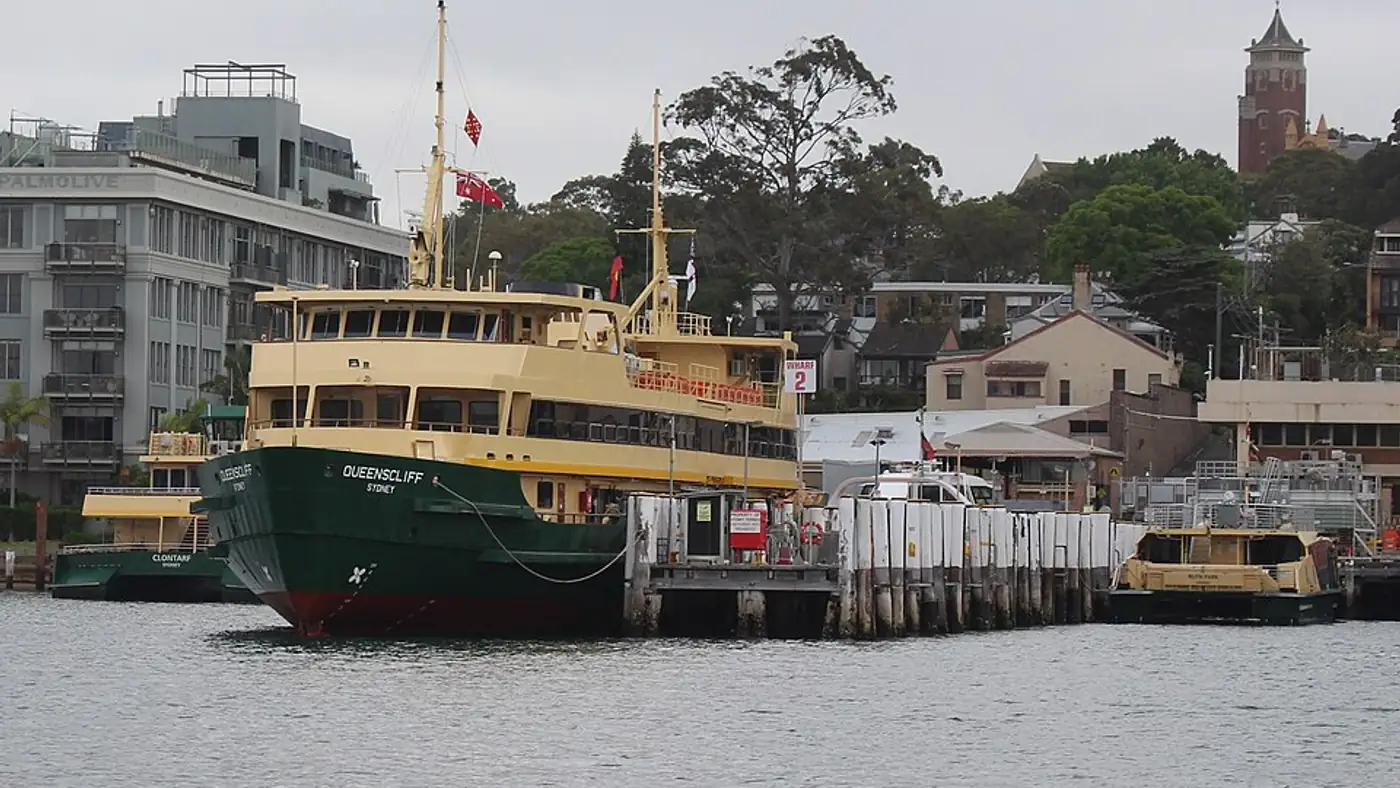
Sydney Ferries has begun a four year retrofit program covering 22 of its 55 passenger vessels, starting with the first two ships entering dry dock at Greenwich this month under a program the operator has labelled Green Fleet 2030.
Each vessel will receive a 1.2 megawatt-hour battery pack, a re-shaped hull intended to cut drag, LED lighting and a shore power connection so ships can switch off their auxiliary engines while berthed. The operator says the package should cut fuel consumption by up to 30 per cent per vessel.
The first ship into the program is the 34-metre Rivercat-class vessel Collaroy, a 400-passenger catamaran that has carried around 11 million passengers since entering service. It is due back in service in December, and will be followed by Vaucluse, one of the three vessels allocated to the F1 Parramatta to Wharf 5 Circular Quay route, which carries close to 2.4 million passengers a year.
Work is being carried out at a private dry dock in Alexandria, under a contract the operator says was let in May. Battery packs are being installed on the lower deck, replacing diesel fuel tanks that were removed in a hull refit completed in 2024.
"Every vessel we can put on batteries is one less ship idling at a wharf, and that is where most of the direct emissions happen," a Transport for NSW spokesperson said in a statement.
The Sydney Ferries sustainability retrofit is not a single technology swap. Each vessel leaves the program lighter by around 25 tonnes once the diesel tanks come out, which changes ballast and stability calculations and requires a stability manual update for every vessel in the program. Engineers have described the hull work as the least predictable element, with weather and availability of the dry dock driving the schedule.
The first vessel's sea trials are scheduled for November, and the operator has said it will publish measured fuel consumption against the modelled baseline rather than relying on the design figures.
Replacement vessels would be cheaper per unit of emissions saved, but the program is a compromise driven by the delivery timetable. Two new hydrogen-capable catamarans are under construction in a South Australian shipyard, with the first due in service in 2028 and the second in 2029. Neither will be emissions free on the short Parramatta run, where refuelling infrastructure does not yet exist.
The retrofit decision was taken after modelling found that the vessels selected for the program account for 41 per cent of the fleet's fuel use, because the larger vessels spend more time in the middle of the harbour and at higher speeds. The fastest routes, including the run from Circular Quay to Manly and the Cronulla coastal service, account for less than a quarter of fuel use despite carrying a third of passengers.
Shore power is the less visible half of the retrofit. Six of the 48 wharves now have the capacity to supply vessels with power from the grid, up from two in 2024, with the program prioritising Circular Quay, Manly, Neutral Bay, Watsons Bay, Taronga Zoo and Drummoyne.
Installation is complicated by the wharves' age. The Drummoyne wharf is due for a major rebuild, and the operator has programmed its electrical upgrade to coincide. On the City Circle and a handful of suburban wharves, no installation is currently scheduled. Connections to the grid also depend on an Ausgrid upgrade at the Circular Quay end, which is scheduled for 2027.
The operator estimates the program will avoid 34,000 tonnes of carbon emissions a year by 2030 once all 22 vessels are converted, and that more than $11 million a year will be saved in fuel from 2029. A published emissions register, updated quarterly, records vessel-level fuel use and has been used to track whether the retrofit delivers the modelled savings.
Full fleet details and timetable information are published by Sydney Ferries and Transport for NSW. For more commuter coverage, see the City hub.
Direct inquiries, corrections, or documentation concerning this dispatch to our editorial newsroom desk.
Western Sydney Airport is preparing for its first full year of operations.

Sydney Metro City Southwest extension is preparing for trial runs in 2026. The extension will add 12 stations and 26 kilometres of track to the Sydney

Western Sydney hospitals receive a $38 million health package boost. The funding will support critical infrastructure upgrades and expanded services

The Western Sydney Airport aerotropolis is attracting unprecedented investment ahead of the October 25 opening. The airport is the centrepiece of the