
Sydney City: Western Sydney Airport: Western Sydney Airport is
Western Sydney Airport is preparing for its first full year of operations as a cornerstone of western Sydney's economic and transport transformation.
6 min read

The first train arrived at the Orchard Hills facility in July after a 23,000-kilometre voyage from the Siemens Mobility production plant in Vienna.
The City Desk is a contributing writer covering city and public affairs for The Sydney Times.
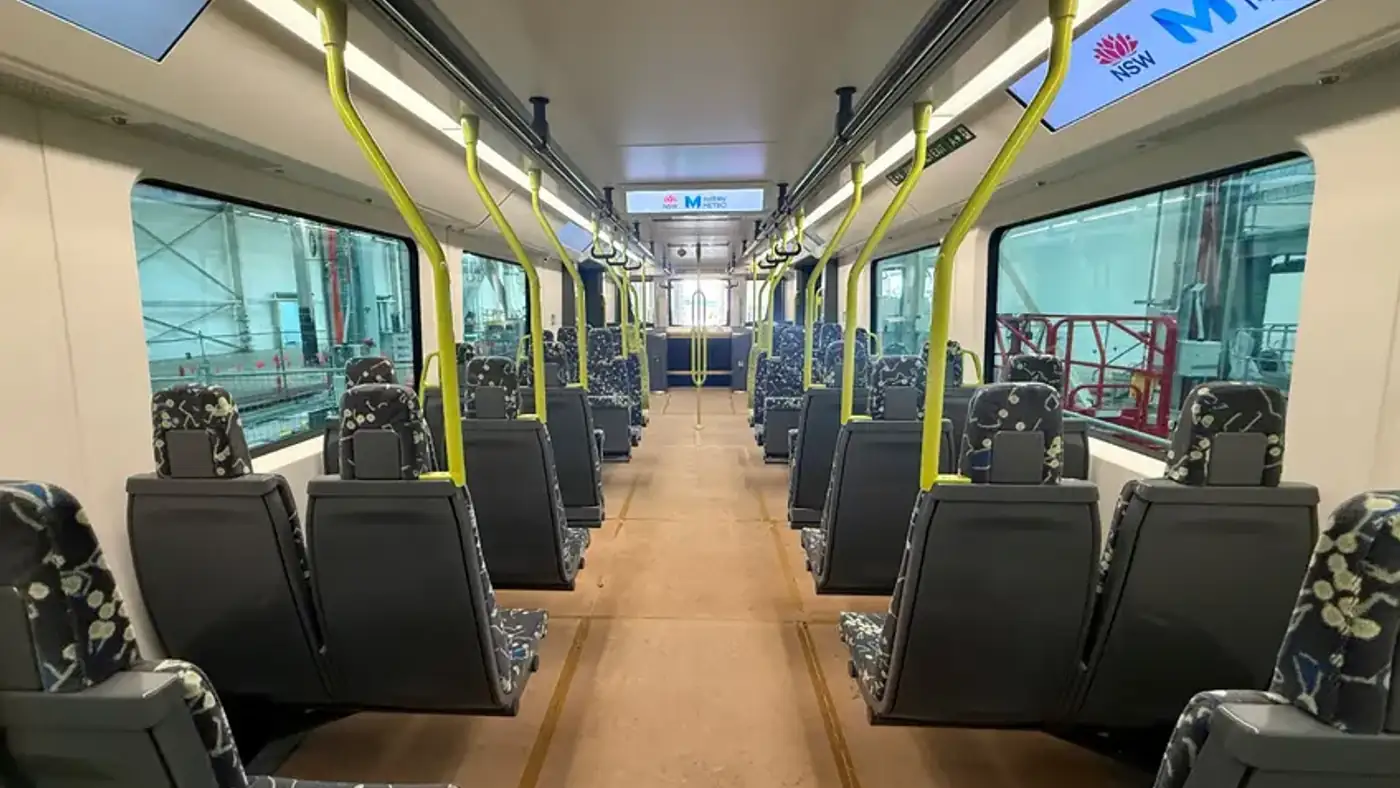
Dynamic testing has commenced on the Sydney Metro Western Sydney Airport line, with the first three-car train now undergoing stationary systems checks at the Orchard Hills Stabling and Maintenance Facility ahead of live corridor trials later this year.
The first train arrived at the Orchard Hills facility in July after a 23,000-kilometre voyage from the Siemens Mobility production plant in Vienna. Since then, Parklife Metro technicians have been running static validation tests to confirm onboard systems are powered, connected and operational before the train moves onto the track for dynamic testing.
Dynamic testing represents the next operational readiness milestone for the 23-kilometre line. Once static checks are complete, the train will run under its own power along the alignment to validate braking, signalling, platform screen doors and communications systems at each of the six new stations.
According to the NSW Government ministerial release on track laying, all track has now been laid between St Marys and Bradfield, with more than 26 kilometres of railway installed as of June 2026. The line uses 106.8 kilometres of rail and 76,285 sleepers, with track formation continuing inside the twin metro tunnels via two Concrete Placement Unit machines capable of pouring up to 85 metres of track slab per day.
The Western Sydney Airport metro line will connect St Marys Station with the new Western Sydney International (Nancy-Bird Walton) Airport and Bradfield City Centre via six stations: Orchard Hills, Luddenham, Airport Business Park, Airport Terminal and Bradfield.
The Australian and NSW Governments have a shared objective of having the metro line operational when Western Sydney International Airport opens for passenger services on 25 October 2026. Free airport buses are currently bridging the gap, running every 30 minutes between metro stops along the route, but the metro will provide a permanent 15-minute connection between St Marys and the airport terminal.
The first of 12 trains was delivered to site in July, with the remaining 11 sets due to arrive progressively through 2026 and into 2027. Each three-car train carries 645 passengers and features 30-centimetre-wider aisles than M1 Line trains to accommodate luggage, real-time flight information displays, and up to eight bicycle storage spaces.
The train seating features a custom Indigenous upholstery design called Ngurra Baduwa, created by Dharug artists Leanne Watson Redpath, Tina Barahanos and Alexandra Byrne of BBR. The artwork references Ngurra (Country) and Badu (water) across Cumberland Plain, the region the line will serve.
The project has supported more than 2,300 construction jobs to date, with the PPP contract awarded to Parklife Metro in December 2022 covering stations, systems, trains, operations and maintenance for 15 years after opening. Once operational, the line will carry up to 7,740 passengers per hour in each direction, with free public transport connecting to the airport before passenger services begin.
For more context on Sydney transit infrastructure, see The City.
Direct inquiries, corrections, or documentation concerning this dispatch to our editorial newsroom desk.
Western Sydney Airport is preparing for its first full year of operations as a cornerstone of western Sydney's economic and transport transformation.

The trial runs will use the existing Metro North West Line rolling stock, with driverless trains tested on the new track between Sydenham and Bankstown.

Western Sydney hospitals receive a $38 million health package boost. The funding will support critical infrastructure upgrades and expanded services.

The Bureau of Meteorology's summer outlook lands in late October, with El Nino at near-record levels and a positive Indian Ocean Dipole likely to develop.