
Sydney Tech: 5G Network Expansion
Sydney's 5G network expansion is accelerating as coverage improves. The major telecommunications providers are expanding their 5G networks across the
5 min read

A $86 million quantum computing hub at the University of Sydney gives researchers on-site access to 200 qubit hardware targeting drug discovery
Tech & Ideas Desk is a contributing writer covering tech and public affairs for The Sydney Times.
The University of Sydney has opened a $86 million quantum computing hub that gives researchers in Australia on-site access to trapped-ion and superconducting hardware, with drug discovery in the Darling Downs and south-west Sydney named as the first target applications.
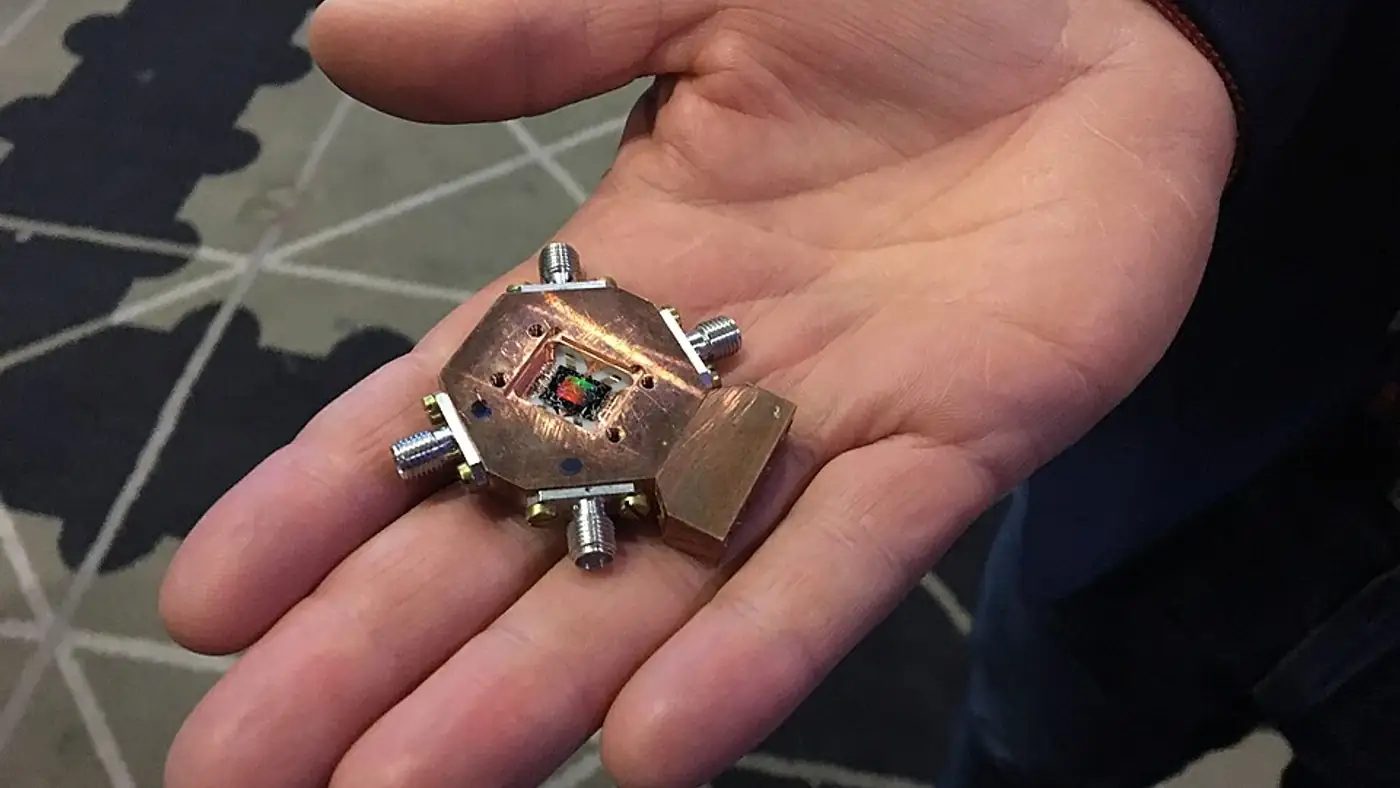
The facility, housed in a new building at the university’s Camperdown campus, houses a 200 qubit trapped-ion system, a dilution refrigerator for superconducting work, and a cryogenics laboratory, and is intended to remove the access bottleneck that has pushed most Australian quantum chemistry work into overseas facilities.
The hub’s centrepiece is a 200 qubit trapped-ion processor supplied under a multi-year access agreement with an international manufacturer, with a second system on order expected to raise the site’s capacity to roughly 400 qubits by 2028. The superconducting line, operated with on-site engineers, is aimed at algorithm development rather than chemistry workloads.
Researchers at the university say the value is access, not ownership. Australian teams have previously used remote cloud access to photonic and noisier intermediate-scale machines, which works for demonstrations but not for the repeated 10,000-plus circuit runs that molecular simulation needs.
"A 200 qubit device under our own roof, with our own engineers and our own students on the instruments, changes what is publishable in a two year window," a hub director said at the opening.
The hub is jointly operated with a named national research consortium and will allocate a share of machine time to other Australian universities through a competitive access program, with a separate allocation reserved for industry partners under a commercial access tier.
The Sydney quantum computing hub is best understood as an access facility rather than a research breakthrough. Australia has had quantum capability for two decades, but almost all of it has been built to run experiments on machines owned elsewhere, which suits fundamental physics and does not suit the repeated chemistry runs that drug discovery programs require.
The hub's design puts three bottlenecks in one building: hardware uptime, cryogenics supply, and access allocation. Each of those has been a recurring source of delay for Australian teams, and consolidating them removes the scheduling friction that has previously pushed work to a small number of international collaborators with established access agreements.
The focus on molecular simulation follows the university’s existing work in medicinal chemistry and clinical research, and the concentration of pharmaceutical and biotech capability in the eastern suburbs. The stated near-term problems are the classical bottlenecks in estimating binding energies for large protein targets, where current simulation methods require approximations that compound error.
A 200 qubit machine is not expected to solve protein folding outright, and the university has been careful about that. The near-term applications are narrower: small-molecule optimisation, hybrid quantum-classical active learning, and chemistry-inspired optimisation problems in logistics and scheduling, which researchers say may deliver commercial value sooner.
The hub's industry tier is being used by two clinical-stage local companies, though neither has published results.
The $86 million package combines $40 million from the university, $26 million from a national research infrastructure fund, and $12 million in philanthropic and industry contributions, plus $8 million of in-kind equipment. Operating costs are funded for seven years, with the hub modelled on a national facility rather than a departmental lab, which means a small user-access fee applies to academic time.
A national sovereign computing strategy released earlier this year identified quantum and AI as its two priorities, and the hub is positioned as one of the anchor facilities. A second node is planned at another university, with a location decision expected in 2027.
Staffing starts at 34, including nine research engineers, and the hub runs a joint doctoral program with two other Australian universities. Access applications open to external researchers in October, with the first allocations due in January.
Cryogenics is the quiet constraint on the whole operation. Liquid helium supply remains tight, and the hub has signed a five-year contract with a domestic supplier to guarantee allocation, a detail that has decided the location of at least two competing facilities in other states. Further detail is available from the University of Sydney and the national research infrastructure programme.
Direct inquiries, corrections, or documentation concerning this dispatch to our editorial newsroom desk.
Sydney's 5G network expansion is accelerating as coverage improves. The major telecommunications providers are expanding their 5G networks across the

Sydney's quantum computing sector is attracting significant investment and talent.

Sydney businesses are accelerating their cloud computing adoption as migration costs fall. The trend is reshaping how organisations across the

Sydney businesses face increasing cybersecurity threats as attack volumes rise. The surge in cyberattacks is prompting organisations across the