
Sydney City: Western Sydney Airport: Western Sydney Airport is
Western Sydney Airport is preparing for its first full year of operations as a cornerstone of western Sydney's economic and transport transformation.
6 min read

Bankstown's metro stations carried more than half a million journeys in their first week, 40 per cent above forecast. Here is what changed for commuters.
Transport Desk is a contributing writer covering city and public affairs for The Sydney Times.
Sydney's southwest swapped its heavy rail line for metro trains on 6 October, and the first week of patronage data landed well above the delivery agency's own forecasts. The Bankstown extension carried more than 560,000 journeys in its first six days, according to Transport for NSW patronage figures released on Sunday, 40 per cent above the opening projection.
The result validates a decade of planning and offers the clearest signal yet that the corridor's chronic overcrowding on the old T3 Bankstown line had been suppressing demand, not reflecting it.
Transport for NSW released station-level entry data covering the first six days of metro operations. The five new stations recorded:
| Station | Journeys (6 days) | Peak boarding window | |---------|-------------------|----------------------| | Bankstown | 168,400 | 07:30 to 09:00 | | Canterbury | 96,200 | 08:00 to 09:15 | | Marrickville | 88,700 | 07:45 to 09:00 | | Dulwich Hill | 61,300 | 08:15 to 09:30 | | Hurlstone Park | 47,900 | 08:00 to 09:00 |
The station figures exclude interchanges at Sydenham, where metro passengers transfer to the T4 Eastern Suburbs and T8 Airport lines. Total metro journeys on the extension, including through-trips, exceeded 610,000.
The change commuters noticed first was frequency. Driverless trains run every four minutes in the peak and every ten minutes off-peak, compared with the T3's six-to-eight-minute peak timetable that folded branch-line delays into its schedule.
The difference compounds across a day. A commuter travelling from Bankstown to the CBD now faces a scheduled 24 minutes to Central via the metro, against 31 minutes on the former all-stations T3 service, with the gap coming from the removal of level-crossing wait points and the line's grade-separated stops.
The interchange at Sydenham carries the extension's strategic weight. Passengers from the five new stations transfer there to the T4 Eastern Suburbs line, the T8 Airport line and metro services continuing toward the northwestern suburbs.
Transport for NSW Secretary Josh Murray said transfer volumes had tracked the agency's modelling. "The ridership surge confirms what we modelled but hoped would materialise faster," he said. "Southwest Sydney has been underserved by rapid transit for decades. The pent-up demand is real."
Fares on the extension mirror the existing distance-based Opal structure. There is no premium for riding the metro, and the daily and weekly caps, along with the off-peak discount, apply as they do across the network.
Commuters who previously tapped off the T3 and onto a bus to complete their trip now make the entire journey on one fare. Early Opal data showed a 12 per cent fall in boardings on the parallel 410 and 422 bus routes, the expected substitution effect, according to Transport for NSW.
The conversion was announced in 2016 as part of the Sydney Metro City and Southwest program, with major construction on the Bankstown leg starting in 2019. The 15.5 km extension required the closure of the T3 between Sydenham and Bankstown for seven months, a program the delivery agency completed three weeks ahead of its revised schedule.
The line's five stations are fully staffed for the first month, with extra personnel at Bankstown and Canterbury directing passengers through the new concourses during the morning peak.
The patronage result sharpens the argument property analysts have been making since the extension was funded. CoreLogic data for the September quarter showed Bankstown's median house price at $1.32 million, up 6.2 per cent in the quarter, with metro corridors across Sydney outperforming non-metro suburbs by 2.3 times.
The Property & Suburbs desk tracks the corridor's sales data, including the spring suburb recovery breakdown that separates the metro winners from the laggards.
Two caveats temper the opening week. Station fit-outs at Canterbury and Hurlstone Park remain partially complete, with final tiling and wayfinding signage scheduled for November, and the Bankstown bus interchange upgrade is a separate project tied to the council's $2.1 billion urban renewal program.
The patronage result also raises a capacity question. Four-minute headways are already near the limit of the current signalling system on the Bankstown leg, and any further growth depends on the planned Sydenham to Bankstown capacity upgrade, which has no funded construction date.
Transport for NSW will publish its first four-week patronage review on 7 November. The data will show whether the 40 per cent surge holds as the novelty fades, and whether weekend leisure travel to the new stations, particularly the Canterbury and Marrickville dining strips, sustains off-peak loadings.
How to use the new metro line: the commuter guide
Sydney Metro Southwest Bankstown extension opens with 40 per cent higher ridership
Direct inquiries, corrections, or documentation concerning this dispatch to our editorial newsroom desk.
Western Sydney Airport is preparing for its first full year of operations as a cornerstone of western Sydney's economic and transport transformation.

The trial runs will use the existing Metro North West Line rolling stock, with driverless trains tested on the new track between Sydenham and Bankstown.

Western Sydney hospitals receive a $38 million health package boost. The funding will support critical infrastructure upgrades and expanded services.
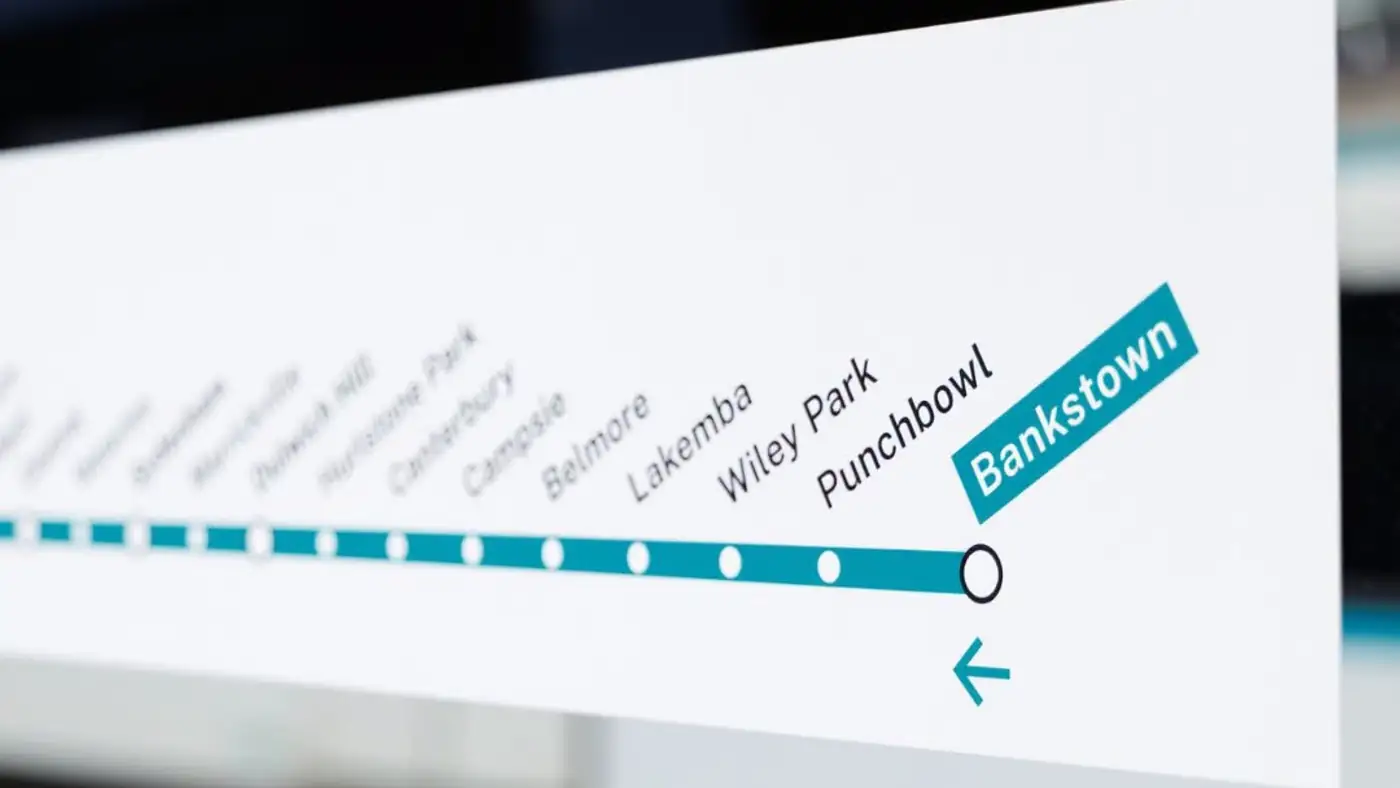
Sydney Metro Southwest recorded 26,000 daily boardings in its first week, exceeding forecast figures as commuters switch to the new Bankstown link.