
Sydney Tech: 5G Network Expansion
Sydney's 5G network expansion is accelerating as coverage improves. The major telecommunications providers are expanding their 5G networks across the
5 min read

Diraq put Australia's first quantum computer in a commercial data centre. AEMO data shows why that is hard: 36 per cent of pipeline projects are cancelled.
The Tech & Ideas Desk is a contributing writer covering tech and public affairs for The Sydney Times.
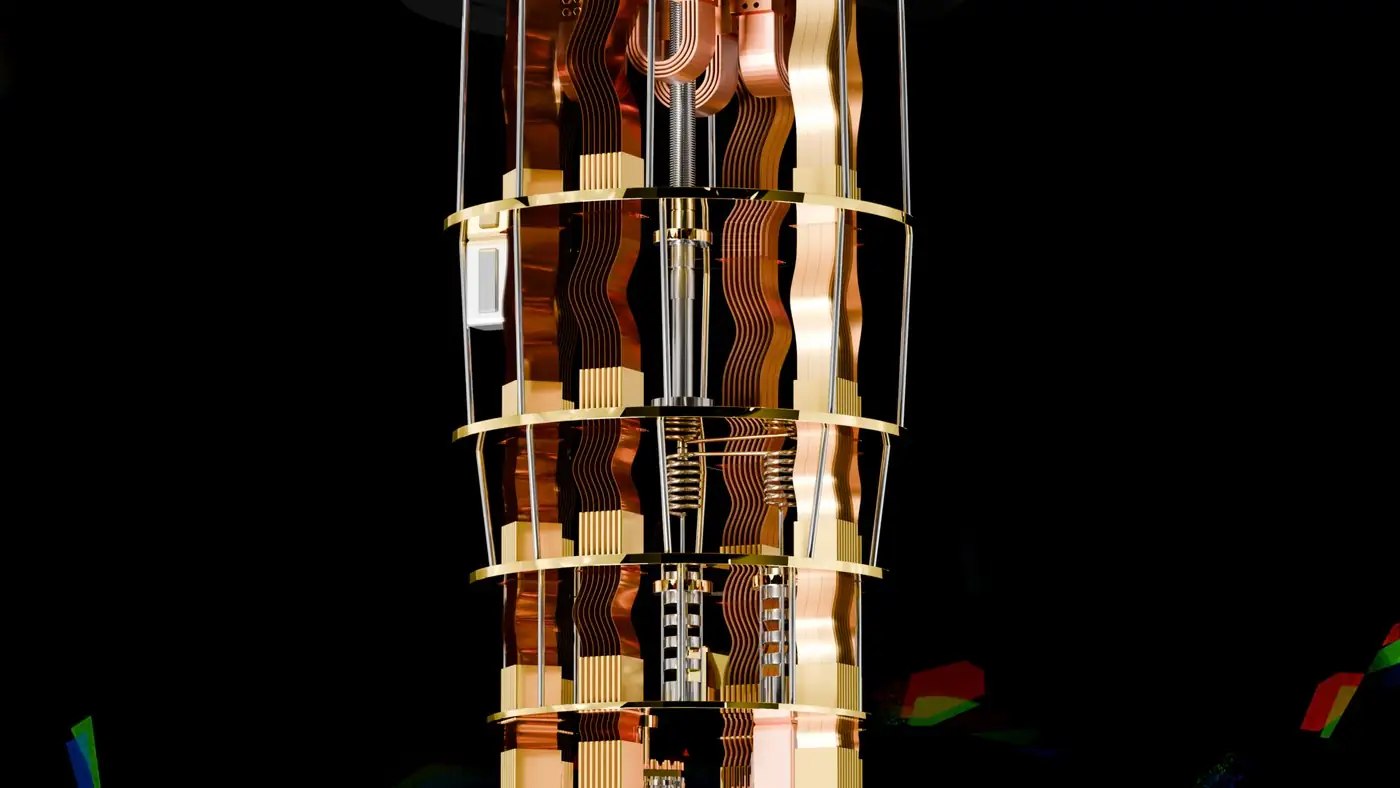
Diraq has installed Australia's first quantum computer inside a commercial data centre, at Equinix in Sydney, with completion on track for October 2026. The system runs eight qubits, uses self-contained cryogenics, draws less than 20 kilowatts, and scales by replacing the chip. Against the backdrop of a Western Sydney AI data centre pipeline measured in gigawatts, that sounds almost modest.
That contrast is the story. The same queue that AEMO is trying to unwind governs the industrialisation of quantum hardware, and the numbers are not encouraging.
Diraq, a UNSW spin-out founded in 2022, took a $20 million equity investment from the National Reconstruction Fund Corporation in February 2026, funding work toward "its first product by 2029, a quantum computer capable of genuine quantum advantage." NRFC chief executive David Gall framed the bet on the company's "combination of silicon-based qubits and tried and tested semiconductor architecture" allowing quantum computers "at a fraction of the cost and size of its competitors."
In May 2026 Diraq signed a letter of intent for up to US$38 million from the US Department of Commerce CHIPS office, as part of nine letters totalling US$2.013 billion announced the same day. At that point Diraq said it had "more than 100 team members globally, with operations in Melbourne, Palo Alto, Los Angeles, and Chicago," having previously described itself as employing over 70 staff and PhD students in Sydney.
Its August 2026 white paper sets a target of 150,000 physical and up to 1,000 logical qubits by 2029, rising above 2 million physical and 10,000 logical qubits by 2031. Chief executive Andrew Dzurak was candid about the difficulty: "Scaling quantum computing isn't about a single breakthrough, it's solving for physics, engineering, and economics at the same time."
Silicon Quantum Computing received a matching $20 million NRFC investment in March 2026 for its atom-precision manufacturing process, with existing investors including CBA, Telstra, UNSW and the state and Commonwealth governments. It received a further $3.6 million in October 2026 under the Critical Technologies Challenge Program for a quantum-enhanced AI processor with Schneider Electric and UNSW targeting energy forecasting.
Q-CTRL announced "Practical Quantum Advantage" on 6 May 2026, claiming an algorithm on IBM Quantum using 120 qubits and over 10,000 two-qubit quantum-logical operations to simulate up to 60 interacting electrons, agreeing with a classical reference method to within about 1 per cent and running up to 3,000 times faster.
Founder and chief executive Michael J. Biercuk noted that "The Boston Consulting Group first predicted in 2019 that quantum advantage would be less than a decade away," and that IBM had predicted advantage for certain simulation problems as early as 2026.
The benchmark compares against a specific classical method rather than the best available classical simulation, and no independent replication has been published. Q-CTRL's own technical guidance concedes that fault-tolerant error-corrected advantage requires a code distance in the millions and "will likely be achieved after 2030."
AEMO's 2026 Electricity Statement of Opportunities, published in August, provides the grid-side context. About 165 operating data centres consumed roughly 5 terawatt hours in FY2026, about 3 per cent of operational consumption, forecast to triple to roughly 15 terawatt hours by FY2030 and grow nearly sevenfold to about 34 terawatt hours by FY2036.
The pipeline is 225 projects with 67 gigawatts of combined capacity. Of the projects in development when the 2025 statement was published, 36 per cent were cancelled, and more than 40 per cent of data centre projects since 2025 have either dropped out or regressed in connection status. Grid connection utilisation averaged about 27 per cent in FY2026.
AEMO's own framing is that "access to power is becoming an increasing constraint and a source of competitive advantage." A pipeline running at 27 per cent utilisation is capacity being reserved as optionality, not demand.
The National Reconstruction Fund Corporation has taken equity in two private companies with no disclosed revenue, burn rate or valuation. Neither Diraq nor Silicon Quantum Computing files financials publicly. The Fund has committed at least $1 billion to critical technologies.
Diraq is one of 11 companies globally selected for Stage B of the DARPA Quantum Benchmarking Initiative. Its roadmap runs to millions of qubits by 2031. Between the eight qubits installed in Sydney this month and that target there are four orders of magnitude, and AEMO's cancellation rate is the best available evidence about how quickly hardware timelines move.
Market context is at AEMO and the NRFC. Our Tech and Ideas desk covers the sector.
Direct inquiries, corrections, or documentation concerning this dispatch to our editorial newsroom desk.
Sydney's 5G network expansion is accelerating as coverage improves. The major telecommunications providers are expanding their 5G networks across the

Sydney's quantum computing sector is attracting significant investment and talent.

Sydney businesses are accelerating their cloud computing adoption as migration costs fall. The trend is reshaping how organisations across the

Sydney businesses face increasing cybersecurity threats as attack volumes rise. The surge in cyberattacks is prompting organisations across the