
Sydney Culture: Sydney Festival 2027: The Create NSW supports
The Sydney Festival 2027 programme is being curated to showcase the best in contemporary and traditional arts, featuring international and local talent.
6 min read

The 25th Biennale of Sydney, titled Rememory, closed in June 2026 after three months of exhibitions and public programming across White Bay Power Station.

Culture Desk is a contributing writer covering culture and public affairs for The Sydney Times.
The 25th Biennale of Sydney, titled Rememory, closed in June 2026 after three months of exhibitions and public programming across White Bay Power Station, the Art Gallery of NSW, Penrith Regional Gallery and several satellite venues in Western Sydney. Curated by Hoor Al Qasimi, the edition explored themes of migration, exile and belonging through the work of 83 artists, collaborations and collectives from 37 countries.
The title Rememory is taken from the African American author Toni Morrison, who coined the term to describe the act of delving into fragmented and forgotten parts of history to recover and confront untold stories in the present. Al Qasimi, who is also artistic director of the Sharjah Art Foundation, used the concept to structure an exhibition that gives particular attention to First Nations stories and the voices of diasporic communities that shape Australia today.
The Biennale ran from 14 March to 14 June 2026, with a media preview on 10 March and a vernissage from 11 to 13 March. Entry was free to the public. The main presentation was at White Bay Power Station, with additional works at the Art Gallery of NSW, Lewers at Penrith Regional Gallery, Campbelltown Arts Centre, Chau Chak Wing Museum, Fairfield City Museum and Gallery, Blouza Hall in Granville, and Centenary Park in Parramatta.
Richard Bell, a member of the Kamilaroi, Kooma, Jiman and Gurang Gurang communities, presented a large-scale social practice and participatory project called RESET. The project consisted of up to three events held in regional locations, culminating at Sydney Town Hall on Saturday 13 June, inviting public participants from all walks of life to come together for discussion, seeking to develop a new constitutional model for the future. The work was one of the most politically engaged pieces in the Biennale, translating the abstract language of constitutional reform into a format that ordinary Australians could participate in.
Mounira Al Solh, the Lebanese artist, presented two activations. At Blouza Hall in Granville, she presented a community-based performance installation featuring the creation of a large vat of tabbouleh to feed attendees, exploring ideas of gathering, food rituals and tabbouleh as a site of cultural memory. An iteration of her ongoing drawing series, I strongly believe in our right to be frivolous, was displayed at Campbelltown Arts Centre, working with members of the Arab diaspora in Australia.
Tuan Andrew Nguyen, the Vietnamese American artist, presented his film The Unburied Sounds of a Troubled Horizon at the Chau Chak Wing Museum. The work ruminates on the post-traumatic reverberations of the Vietnam War, presenting it as a form of political resistance through memory. American artist Dread Scott showed his photographic series Lockdown at Campbelltown Arts Centre, a series of black-and-white portraits and recorded conversations made during brief meetings in US prisons, telling the story of a society that imprisons over two million people from the viewpoint of those locked down.
One of the strengths of Rememory was its investment in Western Sydney. The Biennale partnered with the Inner West Council to present Working Memory, a series of six new performance commissions at White Bay Power Station on 11 and 12 April. Artists included collective Body of Work, Lauren Brincat and Zoe Theodore, Amrita Hepi, and a roaming puppetry performance by Highly Strung Puppets. To celebrate Africa Day in May, artists Rebecca Williams and Adechoon curated a large-scale festival featuring market stalls and food from across the African continent, alongside live performances and music with a focus on Afro-artists based in Western Sydney.
The decision to site significant programming outside the CBD was a deliberate attempt to decentralise the Biennale's audience and reflect the demographic reality of contemporary Sydney. It also addressed a longstanding criticism that the Biennale has been too concentrated in the inner city. Whether the programming succeeded in attracting new audiences to Western Sydney is an open question, but the works themselves were strong enough to justify the expansion.
Rememory closed on 14 June 2026. The next Biennale of Sydney is scheduled for 2028. For more on Sydney culture and events, see Culture & Escapes.
Direct inquiries, corrections, or documentation concerning this dispatch to our editorial newsroom desk.
The Sydney Festival 2027 programme is being curated to showcase the best in contemporary and traditional arts, featuring international and local talent.

With dates confirmed and Expressions of Interest open, the festival is already generating excitement across the arts community and among visitors.

The programme features productions at the Sydney Opera House, the Wharf Theatre, and the Seymour Centre, alongside independent venues across the city.
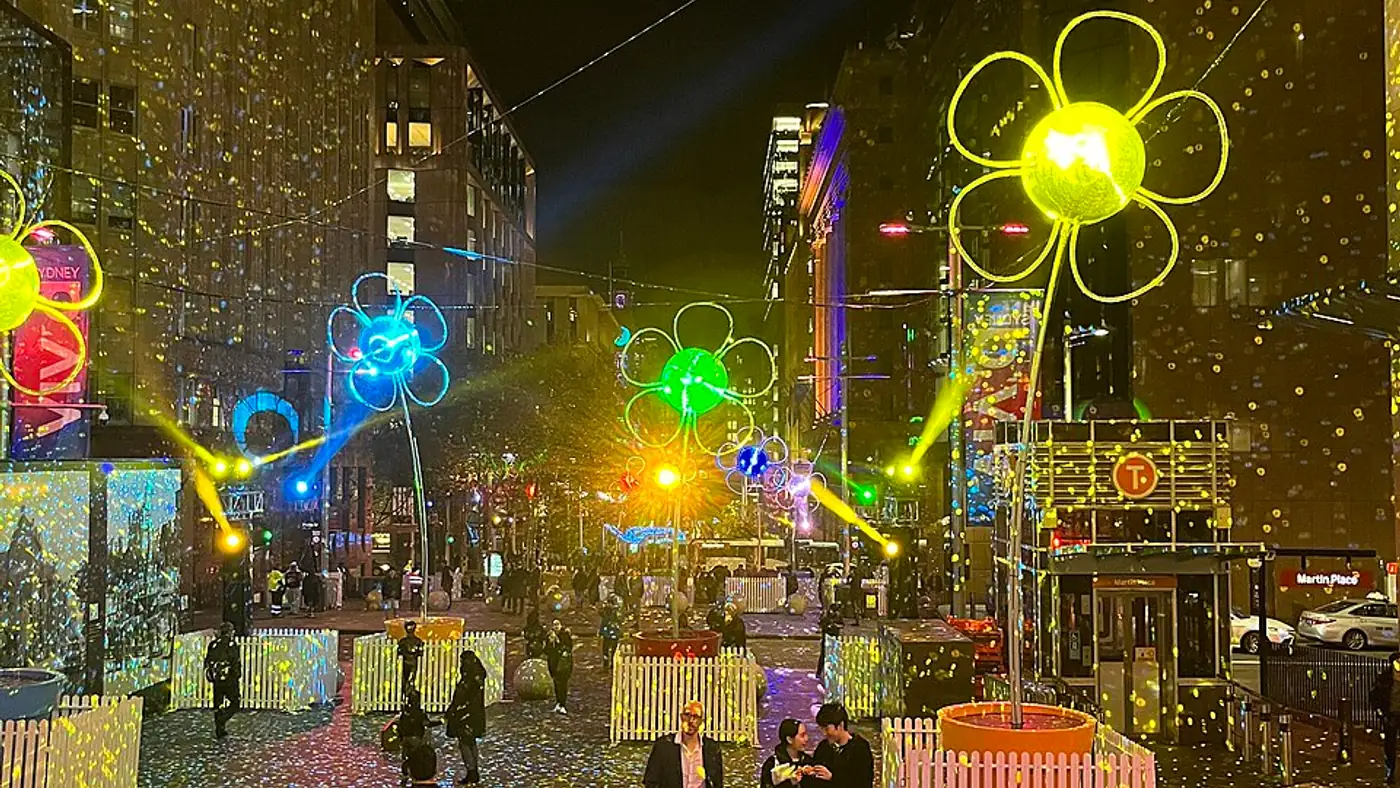
Vivid Sydney 2026 opens across Circular Quay and the CBD, featuring 90 light installations and projections from artists across five continents.