
Sydney City: Western Sydney Airport
Western Sydney Airport is preparing for its first full year of operations.
6 min read

The NSW Budget 2026-27 commits $60.2 billion to transport over four years, alongside a $561.4 million fare and toll relief package. Here is the breakdown.
The City Desk is a contributing writer covering city and public affairs for The Sydney Times.
The NSW transport budget 2026-27 commits $60.2 billion to transport infrastructure over four years to 2029-30, a figure that includes $2.4 billion of new money for Parramatta Light Rail stage two and a $6.5 billion electric bus program stretching across a decade. Set against that is a $561.4 million Transport Affordability Package that hands $100 off car registration, caps tolls at $50 a week and freezes Opal fares at 2025 prices.
The two figures together tell the story of this Budget. Capital works are running at historic levels while the government simultaneously spends politically expensive money lowering what commuters actually pay. Budget Paper No. 03, the Infrastructure Statement, puts total infrastructure investment at $116.7 billion over the forward estimates, an average of $82.7 million a day.
Of the $60.2 billion transport figure, the largest single commitments are maintenance and rolling stock rather than new lines. Heavy rail maintenance reaches a record $2.1 billion for signalling, systems and station upgrades, and a further $121.6 million goes to incident response, including an expansion of the Rail Operations Centre and rapid response teams. None of that appears in the tunnel-boring announcements, but it is where most existing passengers feel reliability.
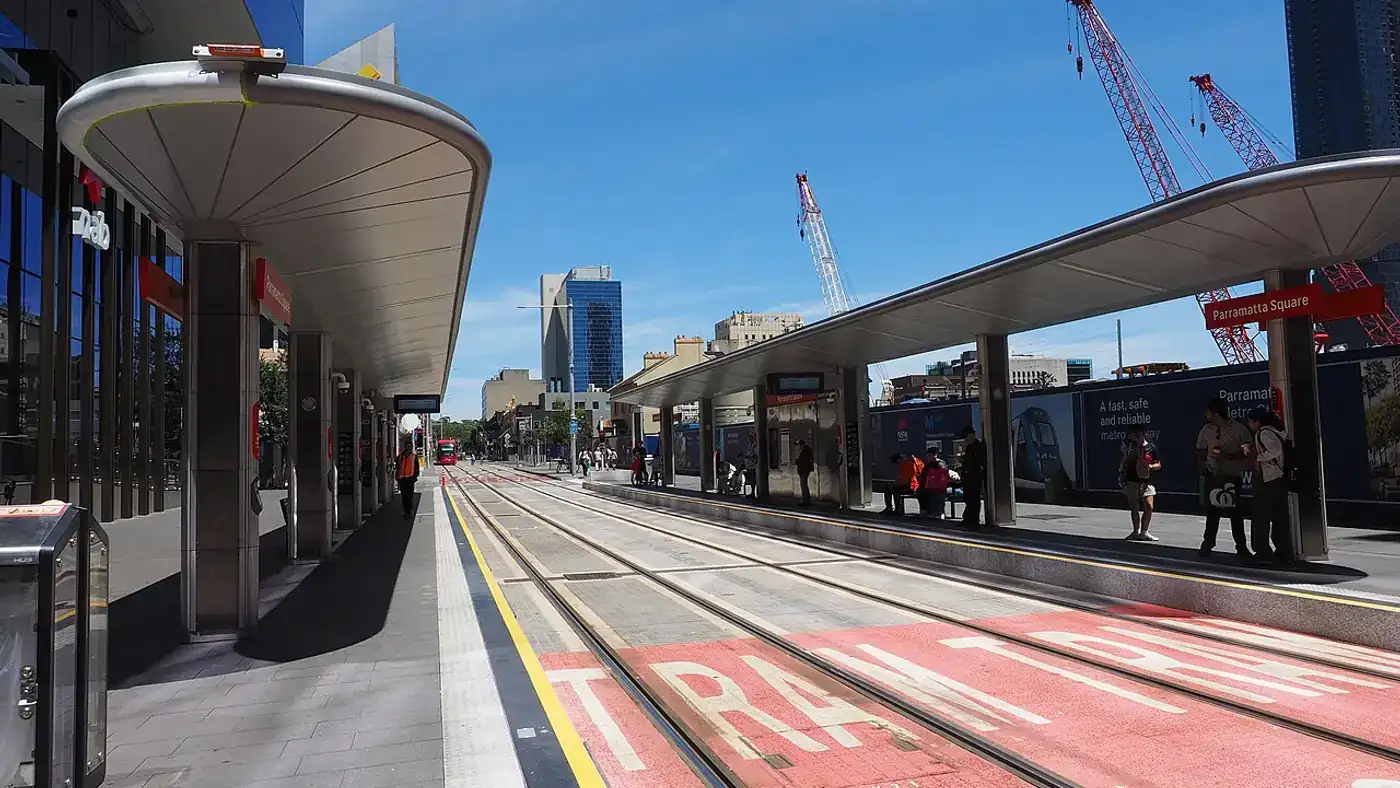
Parramatta Light Rail takes the largest single project allocation at $2.4 billion, extending the line that began carrying passengers between Westmead and Carlingford in December 2024. Sydney Metro West, the 24-kilometre tunnel between Westmead and Hunter Street, does not appear as a new allocation because its funding was settled in earlier budgets. The line is in fit-out now, with 60 kilometres of track going into the twin tunnels and the Clyde stabling facility.
Regional and outer metro corridors take $291.4 million in 2026-27 for upgrades tied to Renewable Energy Zones, including oversize component movements to wind and solar projects.
Western Sydney receives $3.5 billion in additional transport infrastructure and roads funding, part of $4.1 billion for schools and $3.8 billion for hospitals in the same region.
The road commitments are shared with the Commonwealth. Elizabeth Drive and Fifteenth Avenue form a single $2.4 billion corridor linking Liverpool, Bradfield and Western Sydney Airport. NSW has committed $1.4 billion, made up of a further $400.0 million for Fifteenth Avenue and $200.0 million for Elizabeth Drive. The Commonwealth has separately topped up Fifteenth Avenue by $200.0 million, taking its total commitment to $700 million, and Elizabeth Drive by enough to reach $500 million.
A new Bankstown bus interchange gets $46.5 million, tied explicitly to the housing pipeline and access to Sydney Metro and Bankstown Hospital. Windsor Road upgrades at Rouse Hill receive $400.0 million in partnership with the Commonwealth, ahead of the new Rouse Hill Hospital.
Across the border, the Australian Government says NSW draws $3.7 billion of infrastructure funding in 2025-26 and $11.7 billion over the four years to 2029-30, equal to 22 per cent of total Commonwealth infrastructure funding in the first year.
The Infrastructure Statement is unusually direct about funding mix. The infrastructure investment program was 80 per cent debt funded in 2022-23 and will be 53 per cent debt funded by the end of the forward estimates, an eight-year glide path rather than a one-off rebalancing. Transport investment is up 8.4 per cent across four years compared with the 2025-26 Budget, while the broader program is being held at around 2 per cent of Gross State Product.
The affordability package is the smaller but more visible commitment. The $50 weekly toll cap and frozen Opal fares run for 12 months. Neither figure is permanent, and the Budget does not state what happens at the end of that window. Transport for NSW also receives $2.6 million to upgrade FuelCheck and enforce accurate fuel price reporting.
Reliability spending of $2.1 billion sits alongside a finding from the Audit Office of New South Wales, published in May 2026, that Transport for NSW could not demonstrate it was effectively administering the $334 million Regional Roads Fund. The audit found $84 million in additional funding allocated to TfNSW-led projects without the required business cases, with $65.8 million of that total spread across five projects where proposals were not supported by documented justification for scope changes, expected benefits, options, risk assessment or cost estimates. Most business cases remained in development as of March 2026.
A separate Commonwealth review reached a comparable conclusion. The Department of Infrastructure's own submission into the NSW parliamentary inquiry into data centres reported the same pattern in its remarks on grant-funded regional roads.
None of this touches the metropolitan capital program, where the money is flowing to contractors rather than grants. It does raise a question about sequencing. The Budget's own framing, spending at 2 per cent of GSP for a decade, is defensible. The gap between that commitment and the administrative capacity to verify regional spending is the unresolved line item. Next time the four-year numbers are revised, NSW Treasury's budget papers will show where the $60.2 billion actually landed.
Read more on transport and infrastructure at the City desk and follow our Parramatta and Western Sydney coverage. Service information is published by Transport for NSW and Opal fare details by Transport for NSW.
Direct inquiries, corrections, or documentation concerning this dispatch to our editorial newsroom desk.
Western Sydney Airport is preparing for its first full year of operations.

Sydney Metro City Southwest extension is preparing for trial runs in 2026. The extension will add 12 stations and 26 kilometres of track to the Sydney

Western Sydney hospitals receive a $38 million health package boost. The funding will support critical infrastructure upgrades and expanded services
A 17-floor hotel plan from 2018 was replaced by an eight-storey precinct after member feedback. Stage 1 construction is targeted to start early 2027.